Why Pay More for Quality Paint?

Quality paint costs more. Is it really worth it? There are a number of benefits that come with using a good quality paint.

1. Durability and Longevity:

Quality paint lasts longer. It can withstand exposure to the elements, it is formulated to withstand UV exposure, resist mildew and to retain its adhesion. This means less frequent repainting, which really saves you a lot in the long run.

2. Better Coverage:

High-quality paints tend to have better coverage, meaning fewer coats are needed to achieve a smooth, even finish. This not only saves paint but also reduces the labor involved.

3. Enhanced Aesthetics:

The finish of high-quality paint is typically superior, offering a more vibrant and consistent color. It just looks better.

4. Easier Application:

High-quality paints often have better flow and leveling properties, making them easier to apply. This means less frustration and a more professional-looking result, even if you’re a DIY enthusiast.

5. Resistance to Common Issues:

Quality paints are formulated to resist issues like mildew, mold, and fading from UV rays, ensuring that your walls stay beautiful and protected for longer.

6. Health and Environmental Benefits:

Many high-quality paints have lower VOC (volatile organic compounds) levels, making them a healthier choice for your home and the environment.

In the end, investing in quality paint can actually save you money, time, and effort, while also providing a better finish that lasts longer.

Quality paint promotes our company motto, Do it right the first time! Call the doctor for a quality application of your quality paint 541-497-3804

Prepping for Interior Paint

To the casual observer, painting an interior room is simply a matter of dipping a brush or roller in paint and brushing/rolling it on. The reality is that a quality paint job involves a lot of preparation. If you are thinking about doing your own interior paint project, here are some of the steps involved:

1. Clear the Area

Furniture: Move all furniture out of the rooms to be painted. If moving them out isn’t possible, push them to the center of the room and cover them with plastic sheets or drop cloths. Wall Hangings: Take down pictures, mirrors, and other wall decorations. Store them safely in a different room.

2. Clean the Walls

Dust and Dirt: Wipe down the walls to remove dust and dirt. A clean surface helps the paint adhere better. Grease and Stains: Use a mild detergent to clean any greasy or stained areas, especially in kitchens and bathrooms.

3. Protect Fixtures and Floors

Outlet Covers and Light Switches: Remove cover plates from outlets and switches. Cover the exposed outlets with painter’s tape for protection. Floors: Lay down drop cloths or plastic sheets to protect floors from paint drips and spills. Secure them with painter’s tape to prevent them from shifting.

4. Address Repairs

Nail Holes and Cracks: Fill any nail holes, cracks, or dents with spackle or putty. Allow it to dry completely, then sand it smooth. Loose Wallpaper or Peeling Paint: Remove any loose wallpaper or peeling paint. Smooth the edges and sand the area to ensure a uniform surface.

5. Gather Supplies

Tools and Materials: Gather any tools or supplies you might need, such as ladders, tape, brushes, and rollers. Organize them in a convenient location. Lighting: Ensure the room has adequate lighting. If the room is dark, consider adding temporary lights so you can see your work clearly.

6. Confirm Paint Details

Confirm paint colors, coordinating colors and finish types.

7. Safety Considerations

Pets and Children: Keep pets and children out of the work area for their safety and to avoid interruptions. Ventilation: Ensure proper ventilation in the rooms being painted. Open windows or use fans to help with airflow and reduce paint fumes. Ladders: Falling is a serious hazard associated with ladder work and can result in injury or death.

Alternatively, you can call the Paint Doctor and we will take care of most of the steps listed above as normal part of our scope of work, 541-497-3804

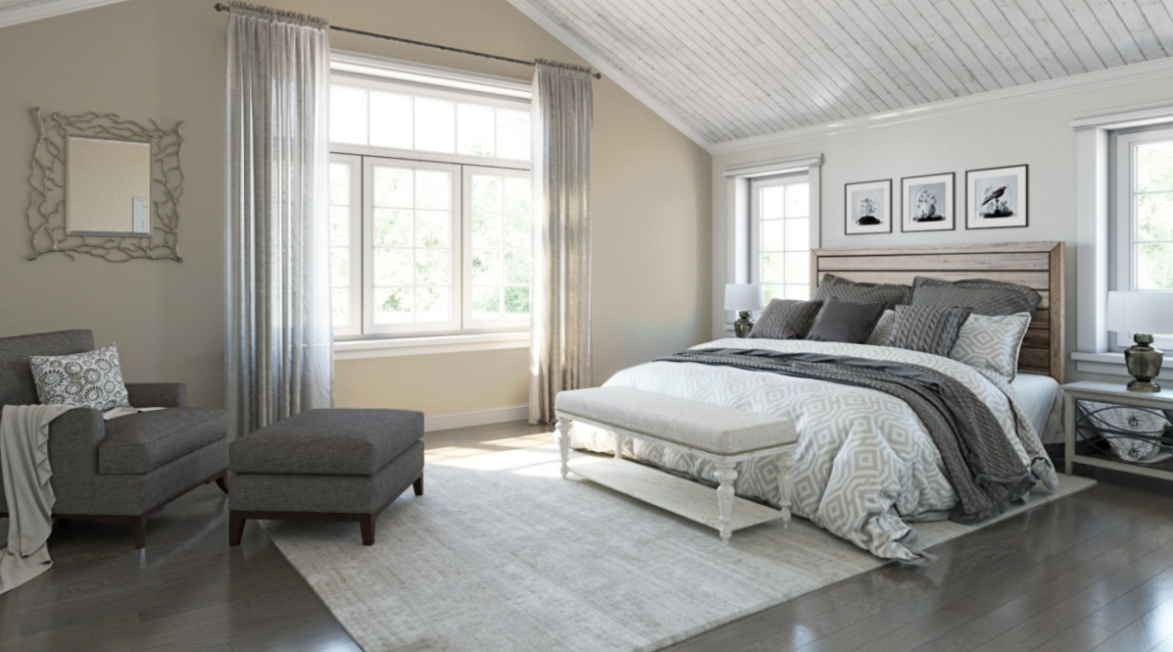
December 2024 Color of the Month

According to Sue Wadden, Director of Color Marketing at Sherwin-Williams, “Like a blanket of understated elegance, Sand Dollar inspires us to sit back, relax and indulge in cozy quietude.”

Beige wall paint with white fireplace wood box and over mantel.
Find calm in the chaos with soothing Sand Dollar.
Pair the inviting neutral with deep earthen browns and soft creamy whites.
The comforting hue goes seamlessly with various wood tones and accent colors, bringing out natural grains and a sense of continuity.

Ready to transform your interior with Sand Dollar? Call Mike 541-497-3804

How Sherwin-Williams Does COTM

Every month here on the Doctor’s blog we feature Sherwin-Williams Color of the Month (COTM). Here’s how they choose the color and the coordinating colors that go with it:

Each year, the Sherwin-Williams Trendsight Team, a group of experts in color and design, come together to map out the Colormix® Forecast – a collection of carefully chosen hues that predicts what’s in for the months ahead. From those palettes, we spotlight stand-out shades to feature as Color of the Month.

Sherwin-Williams color experts select a star shade to set the tone for the month.
A palette of beautifully-paired colors is crafted to help bring our color story to life.
See it all come together in collections that capture every nuance of design and style.

Natural Wood Finish vs Paint

Many projects can be finished in clear coats or stained to take advantage of the natural wood grains rather than covering them with a uniform paint color.

You can take advantage of the natural wood grain patterns on the right project by using stain, which changes the hue without obscuring the natural grain. In fact, wood stain tends to accentuate the wood grain by creating contrast in the patterns created by the growth rings in the wood. The pigments soak in more in parts of the grain while not penetrating as much in other parts.

Clear coats such as lacquers, shellacs and polyurethanes do not change the color as much, but also accentuate the wood grain. Clear coats tend to provide varying degrees of tint depending on the product. Clear coats can also be applied over many types of stain to provide protection against water intrusion and to provide a change in sheen ranging from glossy to matte.

In order to consider stains and clear coats, the projects must be made of natural wood rather than a simulated wood grain. If you are using a stain, the project should be free of caulk and glue residue, which will either still be visible or repel the color tints in the stain and appear as problem areas. Projects that have previously been finished with a clear coat cannot be stained a new color. The cells in the wood are sealed and will not absorb the stain. Sanding would have to go very deep to get below all of the product penetration to make re-staining work.

If a natural wood stain project was made with veneers (a thin layer of real wood), sanding and new stain is not recommended because you could easily go through the veneer layer by sanding too much or too aggressively.

Feel free to ask us about the possibility of using stain and clear coats on your projects and we will advise with the possibilities, limitations, and recommendations. We have done many projects that preserve the natural wood grains resulting in beautiful, long lasting finishes. Call Mike 541-497-3804
Entry with natural wood door.
white walls natural wood trim
natural wood posts and ceiling

November 2024 Color of the Month


“Chinchilla brings a luxurious dose of drama to any space. Through its muted undertone, the hazy purple paint color captures the essence of tranquility. Watch this eclectically urban shade come to life next to warm and cooltones alike – an effect that feels almost neutral in nature. Find balance within the bold with this purposeful color selection,” says Sherwin-Williams.

Chinchilla not your jam? Look for other color ideas in previous blog posts right her at the Paint Doctor. Call Mike to schedule your project 541-497-3804.

I Love Your Accent

Adding an accent color can bring new life to an old room with a minimum of effort. Check out these projects with an interesting color inserted into the scene.

This room benefits greatly with the trim color used inside the open shelves.
Shade of white in living room setting
This fireplace surround breaks up a large wall with a warm vertical accent.
This kitchen island is an oasis of color in a sea of grays and whites.
This vanity brings vibrancy to this business-like bathroom.
Too shallow for a conventional closet, this entry space really comes to life with an accent color and functional coat rack.
This converted closet makes a cool office alcove with its own color scheme.

We can help you spice up your interior space with an accent color. Call Mike 541-497-3804
October 2024 Color of the Month

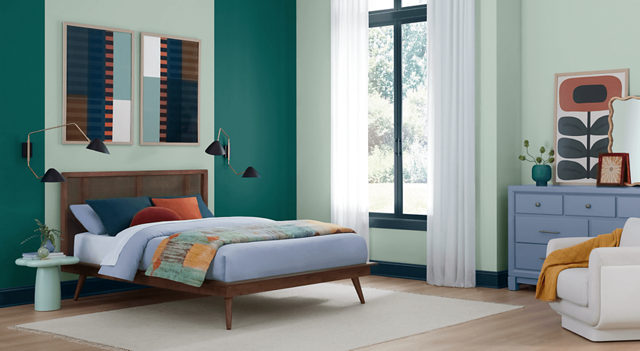
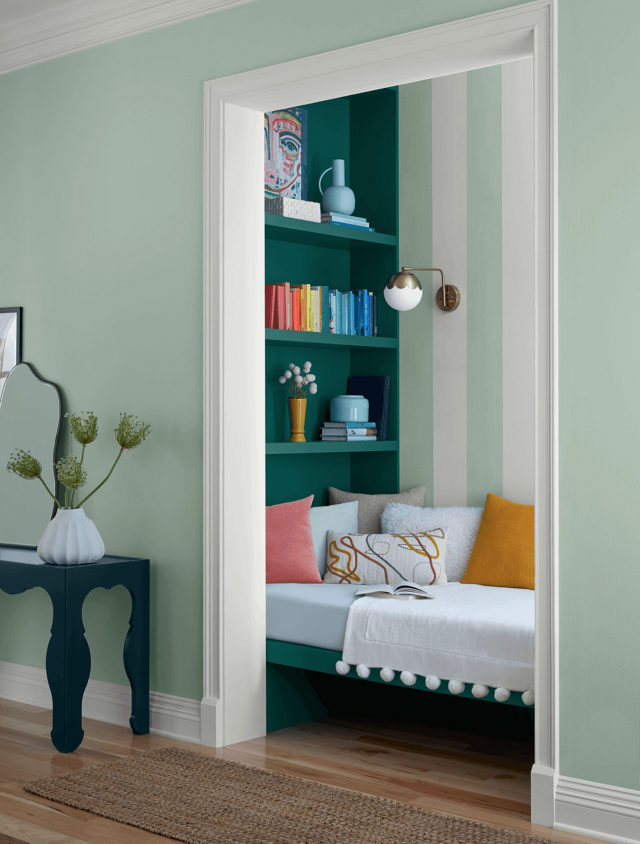
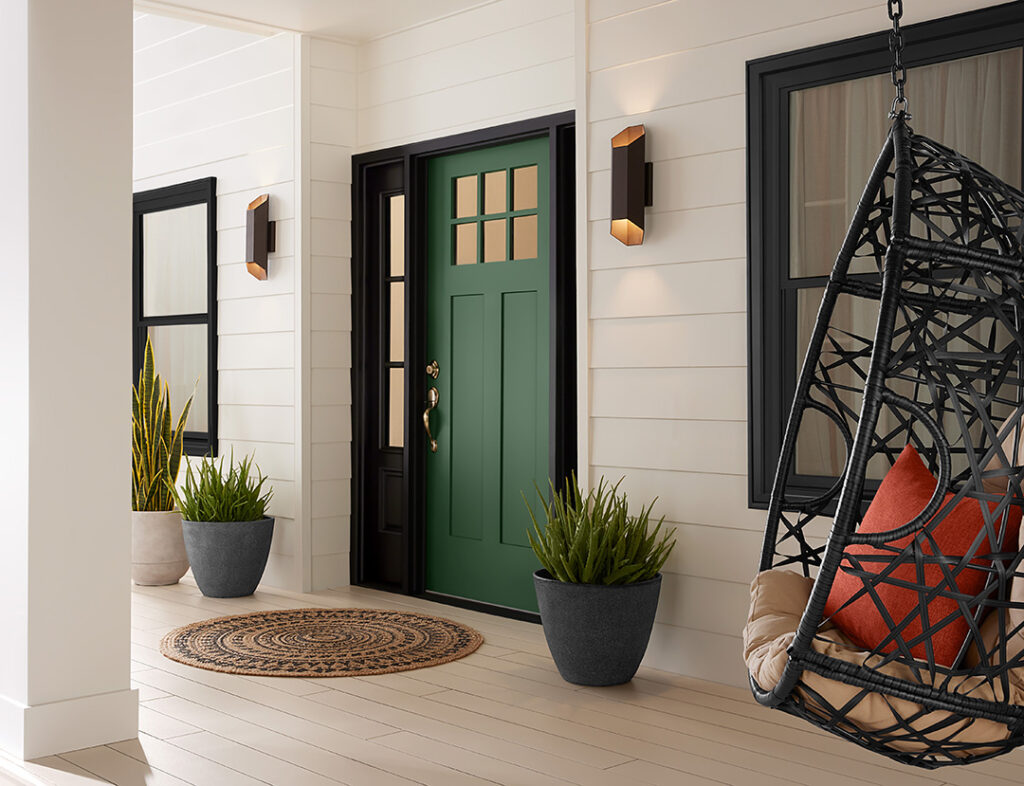
Pairing the rich blue-green of Mount Etna by Sherwin-Williams with leathers and natural wood adds a level of sophistication to existing casual décor. Call Mike 541-497-3804 to schedule your interior transformation.

Colors with Natural Wood

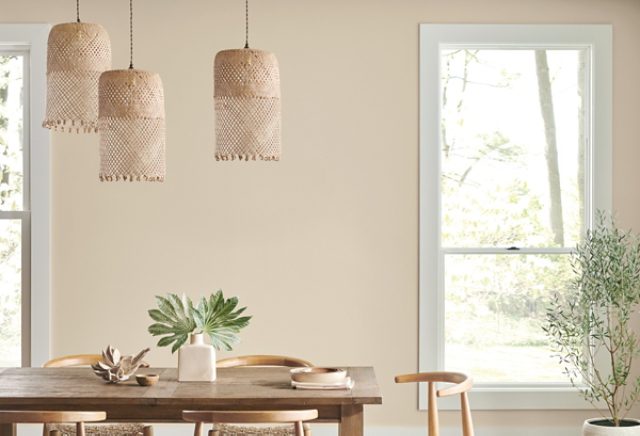
Light natural wood, bamboo, and rattan, are right at home with the color schemes found on Christina on the Coast at HGTV Home by Sherwin Williams. Get these colors in your home by calling Mike 541-4973804

Dark and Light Color Inspiration

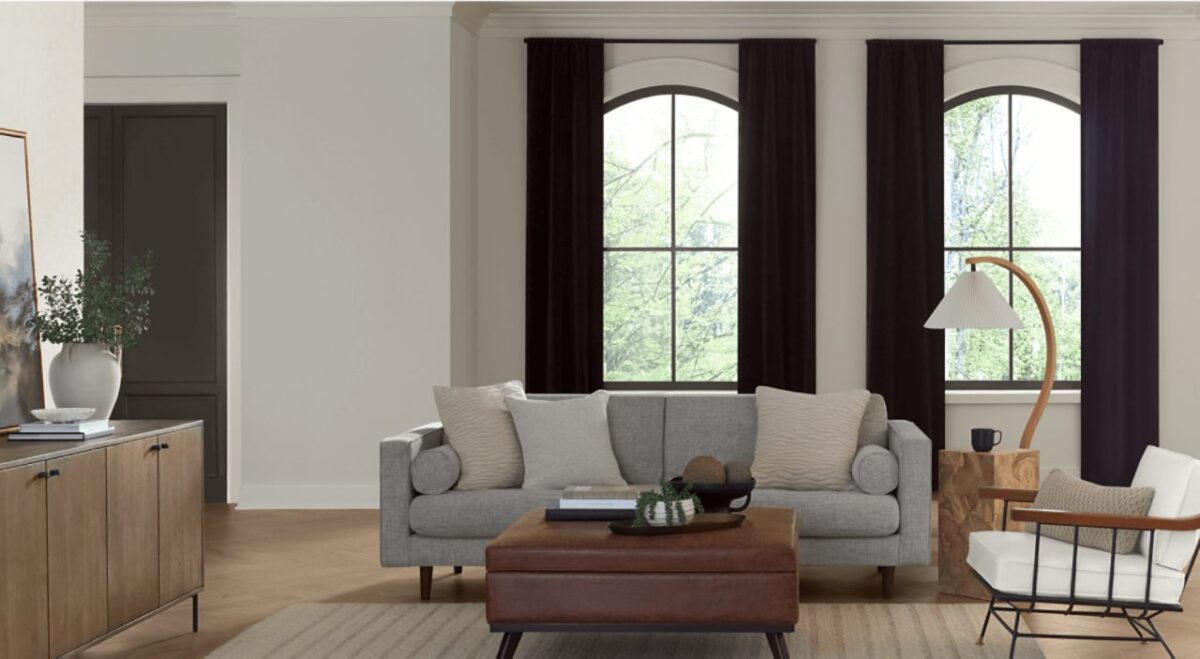
When the colors are called Dark Night and Extra White, you know you are going to see some serious contrast. We found this combination at HGTV Home by Sherwin Williams. It was featured on Christina on the Coast Episode 505.

Throughout the open concept, natural wood and leather add to the contrast of colors.
Black appliances and black hardware add drama to the dark blue cabinets.
Sherwin Williams Alabaster, Extra White and Dark Night