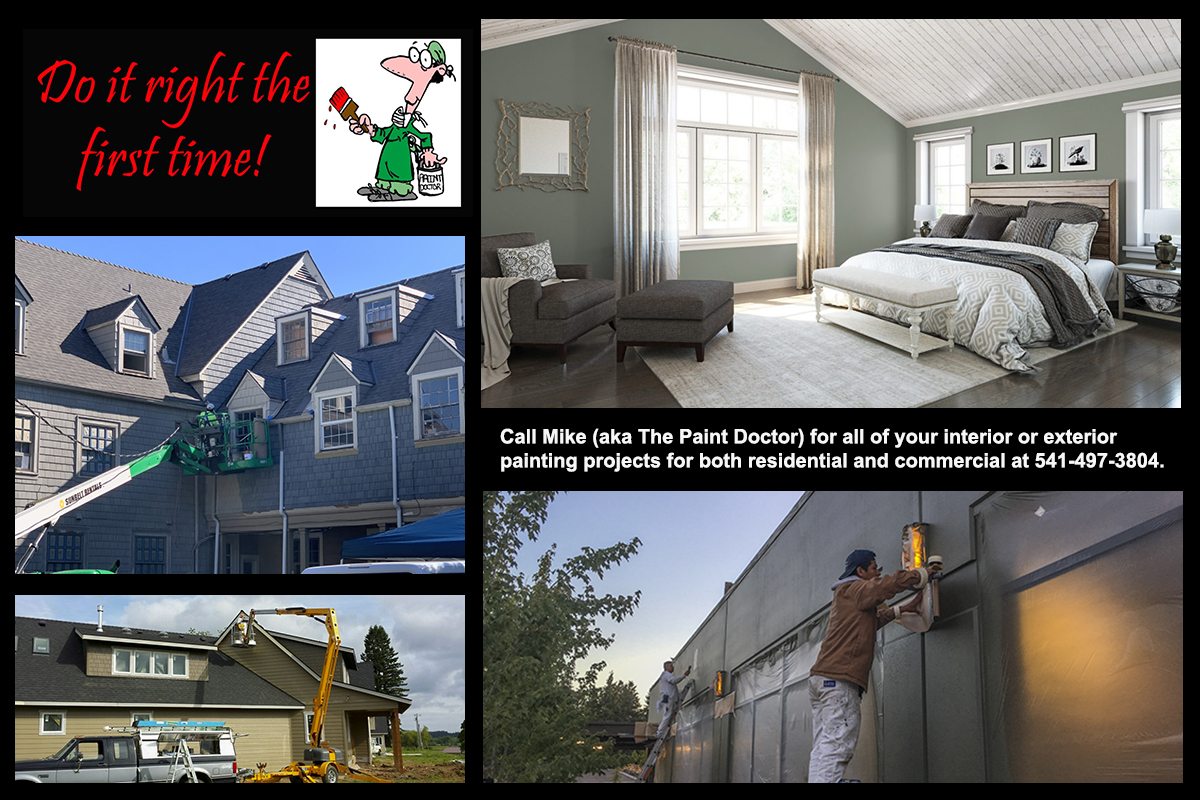
When you hire the pros at Paint Doctor’s Painting, you get an entire crew doing all of those difficult painting operations at once with the speed and accuracy that comes with doing the job right the first time every time.
Paint Doctor’s Painting would love to transform your interior spaces with the color of your choosing or give some new curb appeal to your exterior. Call Mike at 541-497-3804. When you consider the amount of time involved in doing your own paint project compared to hiring the Doctor, we think you will agree. Many property owners significantly underestimate what it takes to wash, prep, caulk, fill, sand, scrape, mask, pack, place, climb, spray, roll, brush, move and do it all again. However, when you hire the pros at Paint Doctor’s Painting, you get an entire crew that is doing all of these operations at once with the speed and accuracy that comes with doing the job right the first time every day. Rather than having your house in that paint-job-in-process mode for weeks, you can have the whole job completed in a day or two. Consider also the safety factor. We have the equipment and knowledge to do the job safely. When you consider how each time you move a ladder and reset it you have to get it just right and even then you are climbing, reaching and working off that ladder… Better left to the pros. Call Mike at 541-497-3804.
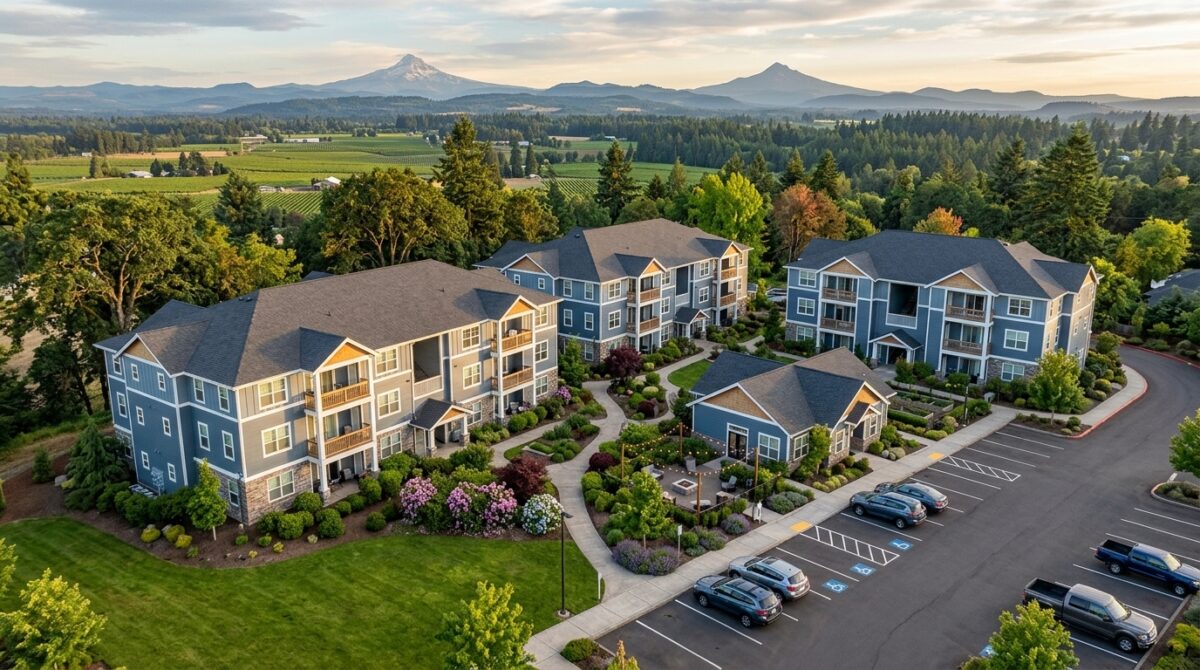
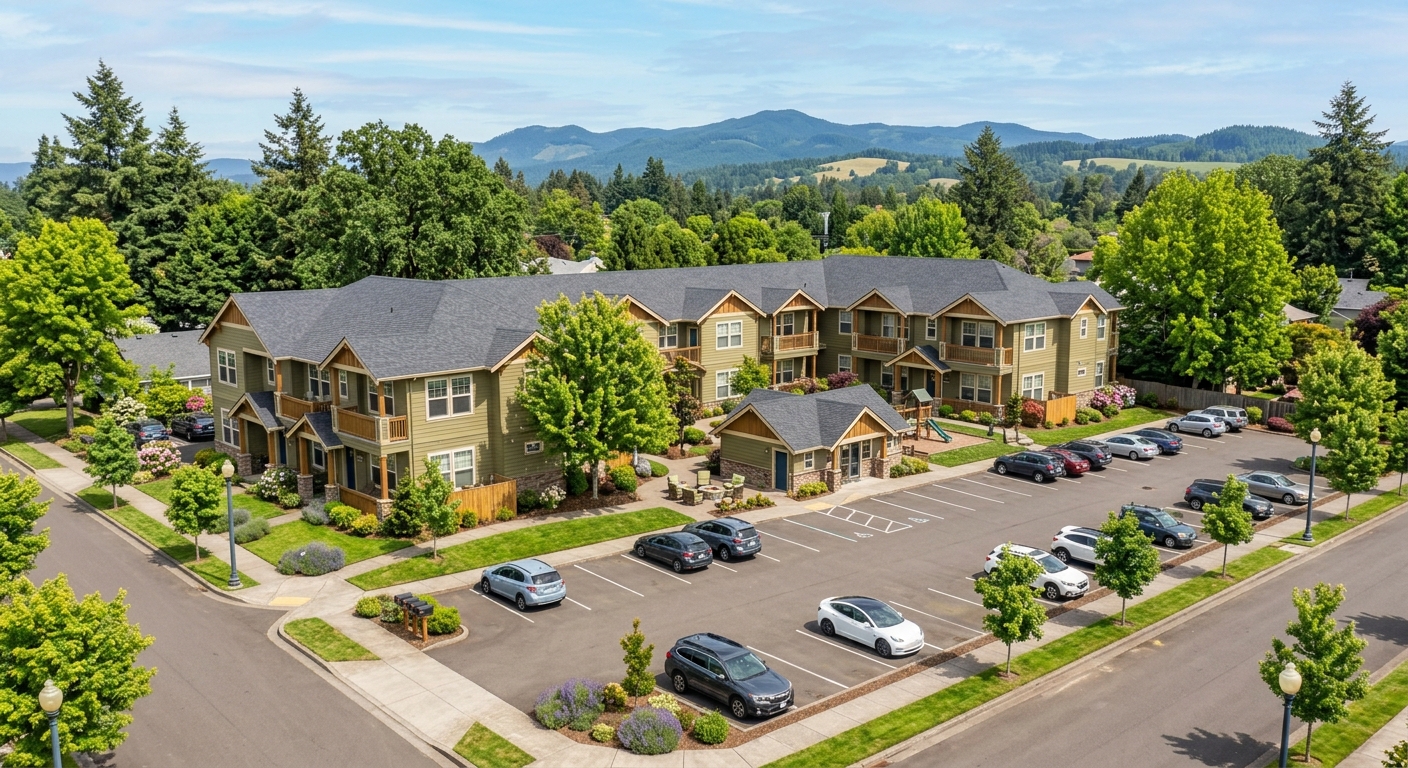
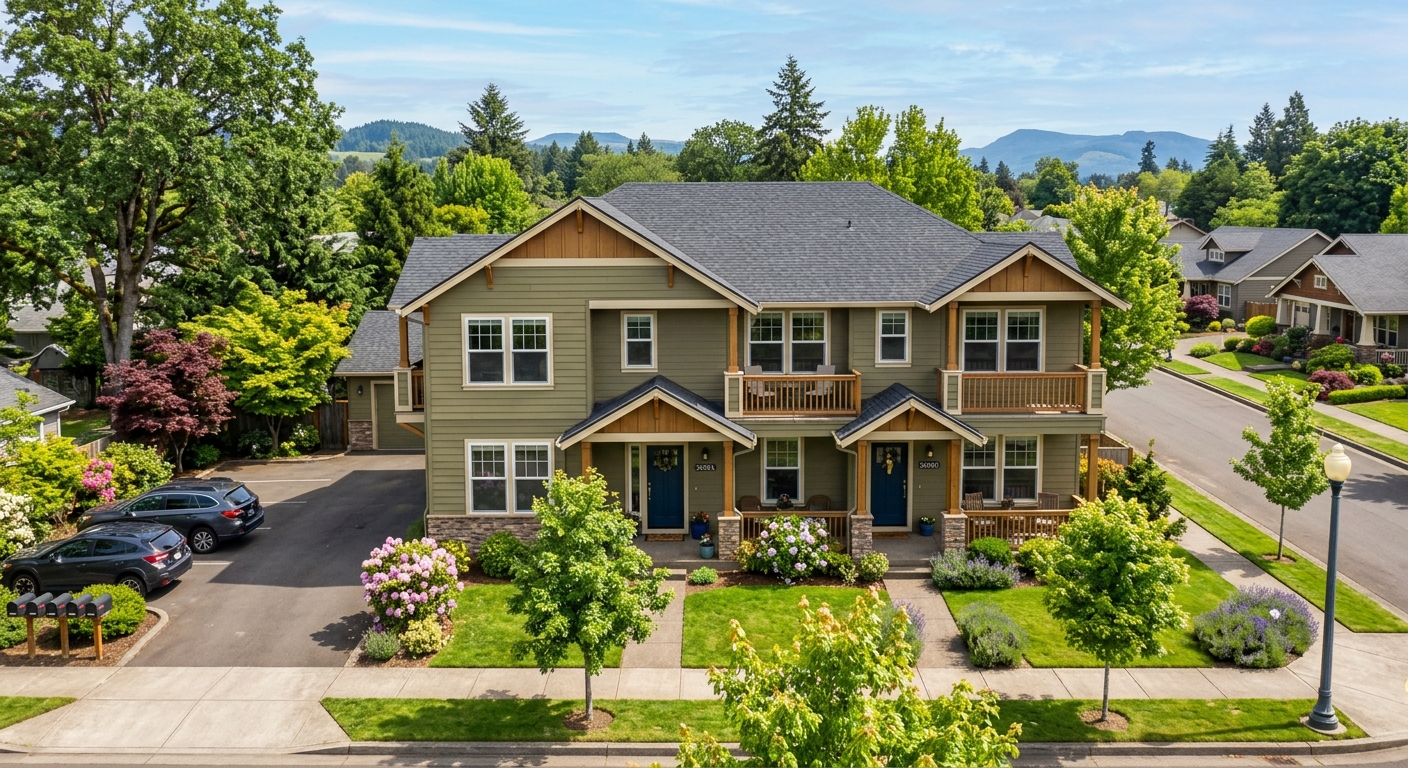
As a multi-family property owner or manager in the Mid-Willamette Valley, maintaining your residential buildings isn’t just about keeping up appearances—it’s a strategic business decision that directly impacts your bottom line. Whether you oversee an apartment complex, townhomes, or a suburban fourplex, first impressions matter.
One of the most cost-effective and high-yield investments you can make in your property is partnering with specialized multi-family painting services.
Improve the appeal of your apartment properties with premium paint from the Paint Doctor.
Here is how strategic interior and exterior painting can increase property value, attract high-value tenants, and protect your real estate asset for years to come.
1. Maximize Curb Appeal to Curb Vacancy Rates
First impressions happen before a prospective tenant ever sets foot in a model unit or leasing office. The exterior appearance of your property sets the standard for how the building is managed and maintained.
Attract Quality Renters: A fresh, modern color palette signals to potential tenants that the property is well-managed, safe, and contemporary.
Stand Out in a Competitive Market: Modern exterior finishes help your suburban fourplex or apartment complex stand out against newer developments without requiring a full structural renovation.
Justify Higher Rent Prices: Properties with strong curb appeal naturally command higher market rents and enjoy shorter vacancy turnover times.
2. Protect Your Building Against the Pacific Northwest Elements
Here in Oregon, exterior paint acts as the primary barrier between your building’s substrate and the elements. Neglecting exterior paint maintenance leads to costly structural damage over time.
Prevent Water Intrusion & Mold: High-quality exterior coatings and elastomeric seals block moisture, preventing wood rot, siding deterioration, and interior water leaks.
Shield Against UV Degradation: Intense summer sunlight can fade paint, crack trim, and deteriorate wood finishes. Professional-grade paints offer long-lasting UV resistance.
Reduce Long-Term Capital Expenses: Proactive paint maintenance costs a fraction of major siding, trim, or structural repairs caused by deferred maintenance.
3. Streamline Unit Turnovers & Reduce Downtime
In multi-family property management, vacant days mean lost revenue. Partnering with a reliable commercial painter ensures quick, seamless unit turnovers between leases.
Fast Turnaround Times: Dedicated commercial crews work around tight lease cycles to get units painted, clean, and ready for market quickly.
Standardized Paint Specifications: Standardizing interior colors and sheen levels across your portfolio simplifies touch-ups and keeps maintenance inventory manageable.
Durable, Washable Finishes: Utilizing high-traffic, scrubbable interior paints in hallways, stairwells, and unit interiors minimizes scuffs and extends the lifespan of the paint job between leases.
4. Enhance Common Areas & Resident Satisfaction
Resident retention is key to steady cash flow. Upgrading common areas—such as shared stairwells, entryways, lobbies, and leasing offices—creates a welcoming environment that encourages long-term leases.
Brighter, Welcoming Interiors: Fresh neutral tones and strategic accent walls can make dim corridors and stairwells feel brighter, larger, and safer.
Low-VOC & Low-Odor Options: Modern commercial painting uses low- or zero-VOC products, allowing us to paint common areas without disrupting current residents or causing unpleasant fumes.
What to Look for in a Multi-Family Commercial Painter
Not all painting contractors are equipped for multi-family projects. When selecting a partner for your Mid-Willamette Valley property, ensure they offer:
Flexible Scheduling: Ability to work around resident schedules, off-peak hours, or phased timelines.
Comprehensive Safety & Insurance: Full liability insurance and strict safety protocols to protect your residents and property.
Clear Communication: Daily job updates, project management, and minimal disruption to parking or common facilities.
Detailed Proposals & Warranties: Transparent pricing, defined scopes of work, and material/labor warranties you can trust.
Ready to Upgrade Your Multi-Family Property?
Whether you need a quick unit turnover package or a complete exterior property facelift, our team specializes in commercial multi-family painting services tailored for property owners and managers across Salem, Keizer, Corvallis, and the surrounding Willamette Valley.
Contact us today to schedule a walkthrough and request a customized, hassle-free proposal for your property!
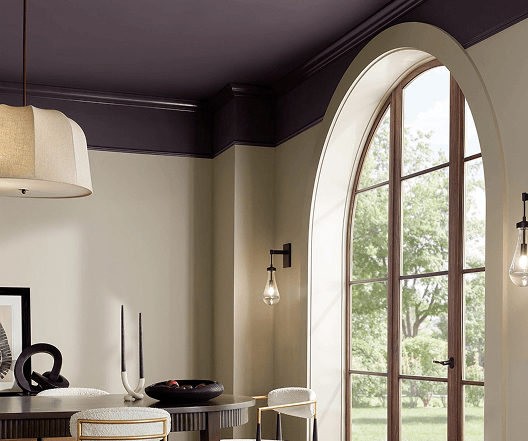
As the crisp autumn air rolls in and we trade our summer routines for cozy nights indoors, our living spaces naturally crave a seasonal shift. October invites us to lean into deeper, more grounding palettes that offer comfort, intimacy, and a touch of drama.
Enter Sherwin-Williams’ official Color of the Month for October 2026: Plum Brown (SW 6272).
At Paint Doctor’s Painting Service, we love helping homeowners and commercial property managers transform their environments with trend-forward yet timeless hues. If you’re looking for a way to refresh your space this season, here is why Plum Brown might just be your next favorite color choice.
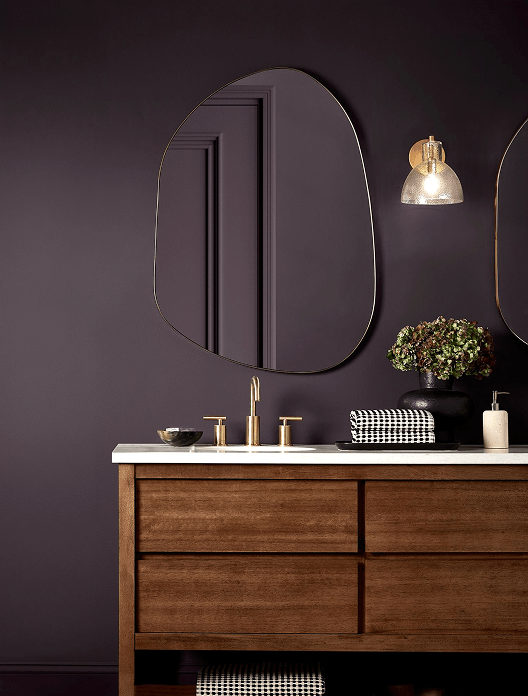
Rich, saturated tones like Plum Brown create an intimate and luxurious atmosphere in modern bathrooms.
What Makes Plum Brown So Special?
Straddling the line between a rich burgundy and a deep, earthy brown, Plum Brown is an opulent, cocooning hue. It captures the sophistication of a high-end lounge while keeping the grounded warmth of natural wood and autumn soil.
If you crave luxurious spaces without sacrificing comfort, this shade strikes the exact right balance. Its deep neutral undertones make it remarkably versatile for moody motifs, architectural accents, and statement-making transformations.
How to Incorporate Plum Brown in Your Home or Business
Because Plum Brown is so richly saturated, it can be styled in several dynamic ways depending on the mood you want to set:
1. Color Drenching for Dramatic Intimacy
Want to make a bold statement? Try color-drenching a smaller, high-impact space—like a powder room, a formal dining room, or a den—by carrying Plum Brown across the walls, baseboards, and even the ceiling. This technique blurs room boundaries and envelops you in a warm, sophisticated embrace.
2. The Fifth Wall (Ceilings and Trim)
If painting every wall dark feels a bit too adventurous for your main living area, try applying Plum Brown overhead. A dark ceiling adds unique architectural dimension, tricking the eye and drawing the ceiling down just enough to make expansive rooms feel intimate and grounded.
3. Commercial Spaces with Executive Elegance
It’s not just for residential homes! Commercial clients—such as boutique retail shops, upscale restaurants, moody hotel lobbies, or executive boardrooms—can use Plum Brown to cultivate an atmosphere of curated luxury, exclusivity, and calm professionalism.
Professional Application Matters
Deep, saturated colors like Plum Brown require a meticulous approach. Rich pigments demand expert surface preparation, precise priming, and flawless application techniques to ensure an even, velvety sheen without lap marks or uneven coverage.
Whether you’re planning a complete interior overhaul for your home or a sophisticated aesthetic refresh for your commercial storefront this autumn, the team at Paint Doctor’s Painting Service brings the precision, tools, and expertise needed to bring your vision to life.
Ready to give your space a rich, seasonal upgrade? Contact us today to schedule your professional color consultation and estimate: 541-497-3804
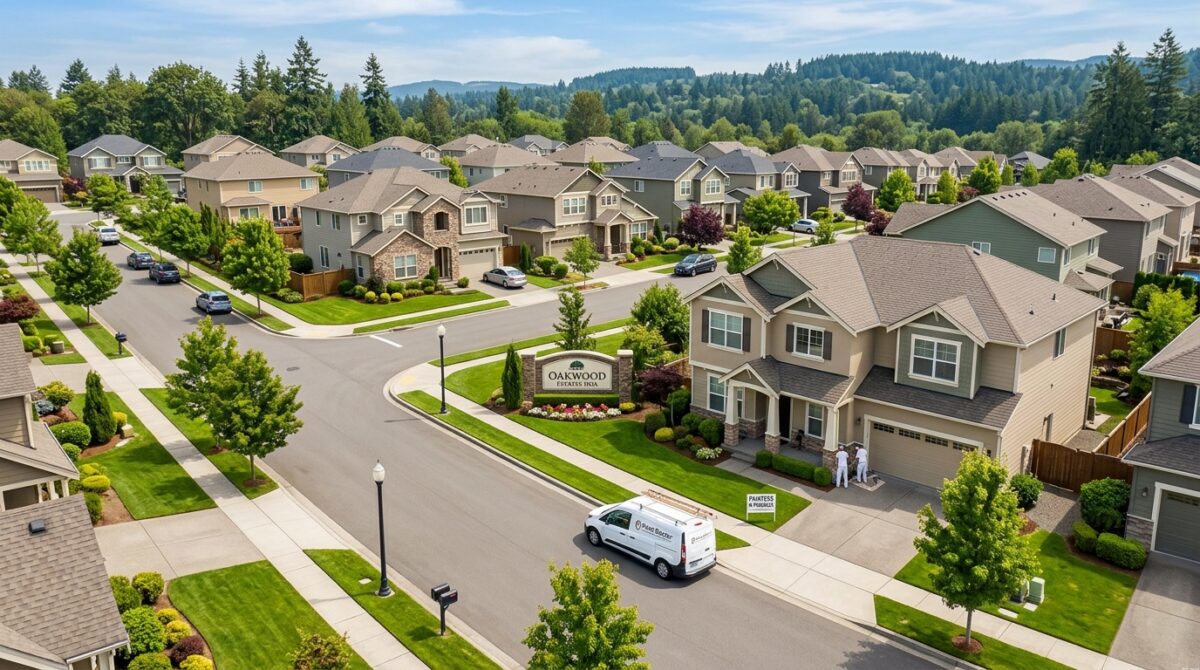
Living in a Homeowners Association (HOA) community brings wonderful perks: well-maintained neighborhoods, great curb appeal, and protected property values. However, when it comes time to refresh your home’s exterior, navigating HOA regulations can feel like walking a tightrope.
A single unapproved paint shade or missed deadline can lead to fines, delayed projects, or even being forced to repaint the entire house at your own expense. At Paint Doctor’s Painting Service, we’ve helped hundreds of homeowners refresh their properties while staying 100% compliant with local HOA architectural standards.
Here is your step-by-step guide to painting your home without the HOA headaches.
1. Review Your Community’s CC&Rs First
Before picking up a color swatch or scheduling an estimate, request the latest copy of your HOA’s Covenants, Conditions, and Restrictions (CC&Rs) or Architectural Review Committee (ARC) guidelines.
Most HOAs regulate:
Approved Color Palettes: Specific combinations for body, trim, shutters, and front doors.
Paint Finish & Sheen: Approved levels for siding (usually flat or low-lustre) versus trim and doors (satin or semi-gloss).
Adjacent Home Rules: Many communities prohibit choosing the same main color scheme as the homes directly adjacent or directly across from yours.
2. Submit Your ARC Request Early
Most HOAs require an Architectural Review Board (ARB) or Architectural Review Committee (ARC) approval form before any work begins.
Submit at least 30 to 45 days before your ideal start date. Approval boards usually meet once a month.
Include exact paint brand names, line codes, and finish types. Simply writing “beige body, white trim” will almost certainly cause your application to be rejected or delayed.
Attach physical paint swatches or renderings if required by your committee.
3. Don’t Skip the “Same Color” Assumption
A common trap homeowners fall into is assuming that painting their home the exact same color doesn’t require HOA approval.
Even if you are refreshing the existing scheme:
Original paint formulas fade over time under sunlight and weather exposure.
HOA boards update approved color palettes every few years. Your original 10-year-old color scheme may no longer be on the approved list.
Rule of thumb: Always verify with your HOA board—even for exact color matches—before starting work.
4. Hire a Contractor Experienced in HOA Compliance
Working with a professional painting team like Paint Doctor’s Painting Service takes the burden off your shoulders. Here’s how an experienced contractor protects you:
Detailed Estimates for ARC Applications: We provide precise paint manufacturer details, sheen specifications, and surface preparation plans to submit alongside your HOA paperwork.
Licensed & Insured Execution: Most HOAs strictly mandate that contractors working on the property carry General Liability and Workers’ Compensation insurance. We provide proof of insurance directly to your HOA manager if required.
Workplace Standards & Timelines: HOAs strictly regulate work hours, noise levels, equipment storage, and debris cleanup. We ensure your property stays clean and work stays within permitted neighborhood hours.
The Paint Doctor Process for HOA Projects
Step
Action Item
Who Handles It
1. Free Consultation
Inspection of home exterior & color consultation
Paint Doctor & Homeowner
2. HOA Submission
Gathering swatches, codes, and contractor details
Homeowner (with Paint Doctor assistance)
3. Approval Check
Verifying formal written ARC approval
Homeowner & Paint Doctor
4. Surface Prep & Paint
Power washing, scraping, priming, and precision painting
Paint Doctor Team
5. Final Inspection
Final walk-through to ensure complete HOA compliance
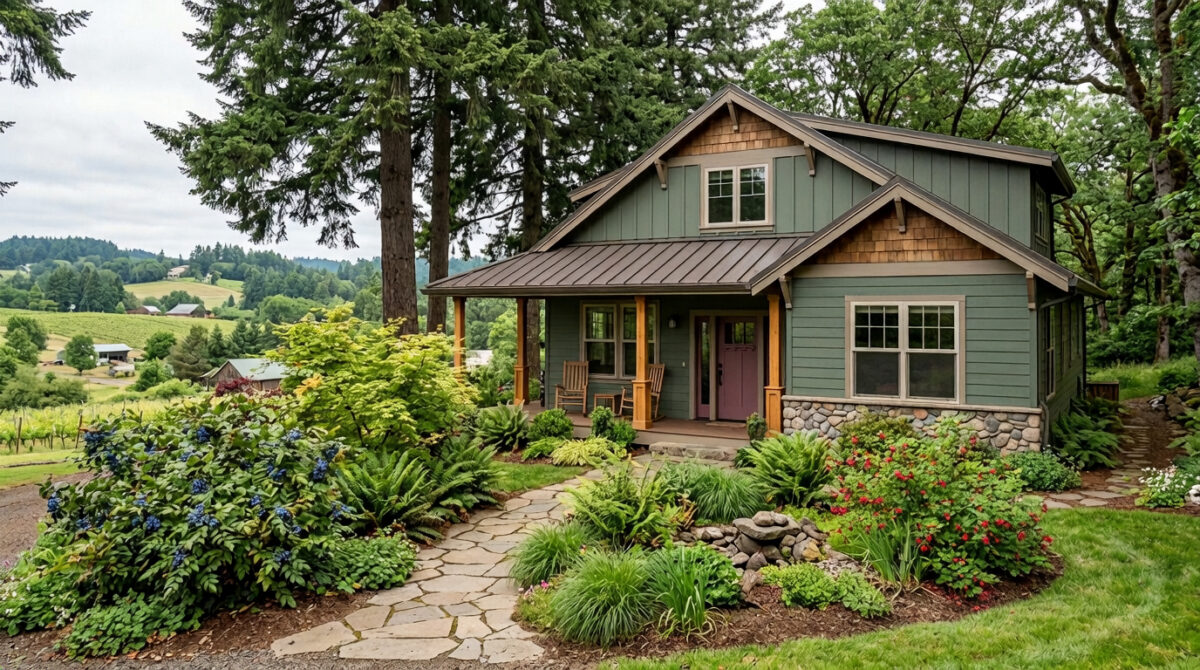
There’s something truly special about owning a rural property in the Willamette Valley. Whether your home nestles into the forested foothills near Corvallis, rests among the rolling vineyard hills outside South Salem, or sits surrounded by the oak savannas of Benton and Polk counties, your landscape is already doing the heavy lifting.
Towering Douglas firs, golden Garry oaks, lush sword ferns, and rich Oregon grape bushes give our region its iconic, timeless aesthetic. But when it comes time to paint your exterior, a common dilemma arises: How do you protect and elevate your home without making it clash against the natural environment?
For many Willamette Valley homeowners, the goal isn’t to make a house stand out like a bright beacon. It’s to make it feel like an organic extension of the land itself.
Here is our guide on selecting exterior paint palettes that blend seamlessly into native Pacific Northwest landscaping, while standing up to our unique climate.
1. Look to the Canopy: Deep Greens and Mossy Earth Tones
If your home is tucked into a grove of evergreens or surrounded by native forest, standard shades of bright green will often feel synthetic or stark. Instead, draw inspiration from the muted, complex tones found in the PNW forest floor.
Sages and Olive Undertones: Soft, earthy greens with grey or brown bases—such as Sherwin-Williams Dried Thyme —reflect the undersides of fern fronds and olive-hued lichen.
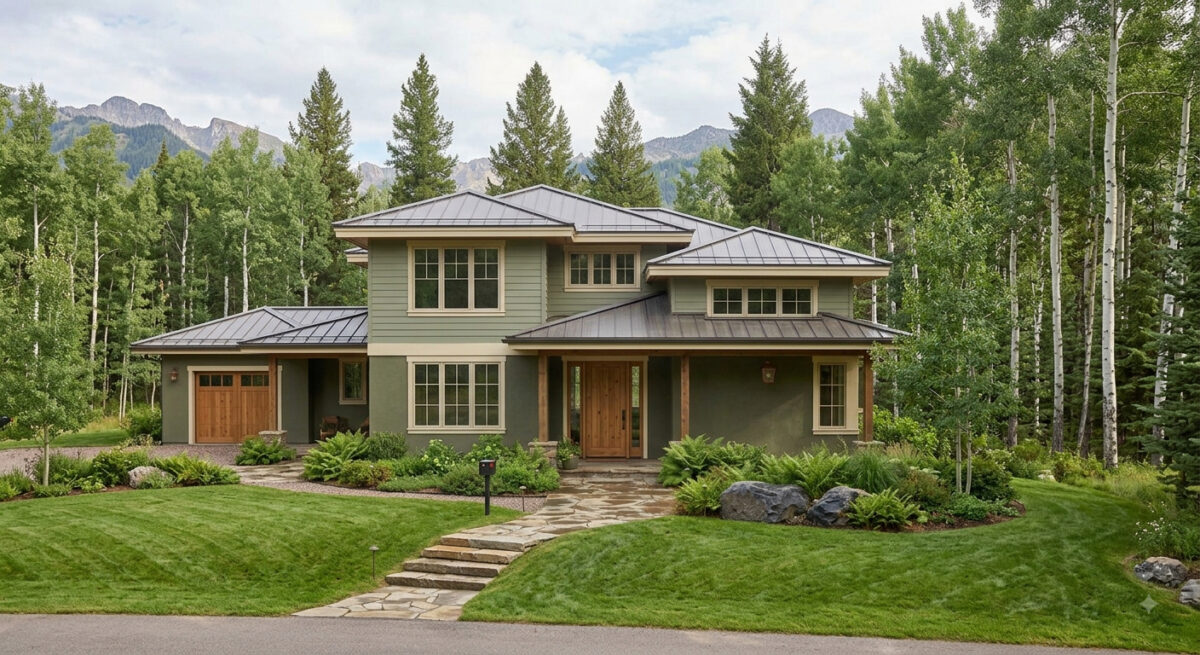
Deep Forest Darks: For modern farmhouses or rustic cedar siding, deep charcoal-greens (like Black Forest Green or Iron Ore) absorb light and allow the bright green foliage around the base of the home to pop naturally.
Local Pro Tip: Overcast Oregon skies tend to amplify blue and cool undertones in paint. Always test green shades on-site during a typical grey afternoon to ensure they don’t shift toward an unintended blue tint.
2. Harmonize with Oak Savannas: Warm Greiges and Bark Taupes
Properties across the valley floor and foothills often feature Garry oak stands, native grasses, and hazelnut or filbert orchards. During late summer and autumn, these landscapes shift to warm, golden hues.
To complement these warmer surrounding textures:
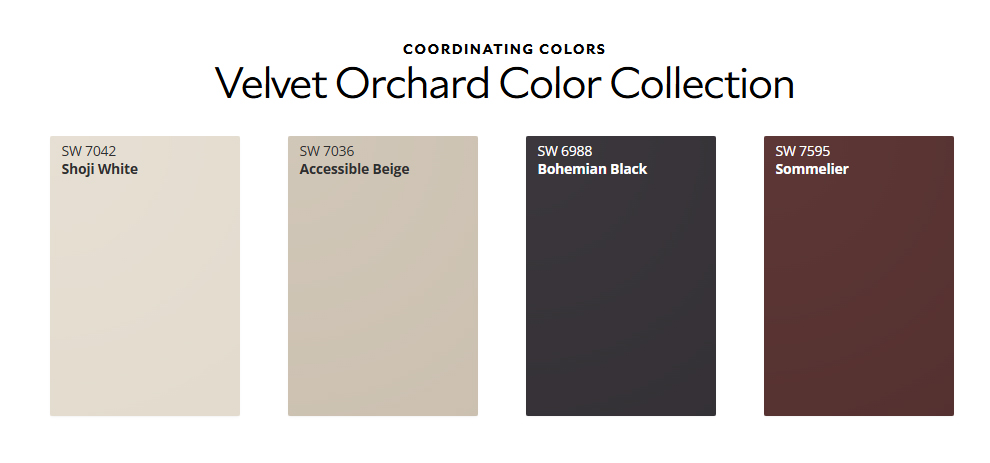
Rich Taupes and Warm Greiges: Colors that bridge brown and grey harmonize with oak bark and dry summer prairie grasses. Look for shades like Accessible Beige, Mega Greige, or Pashmina.
Earthy Trim Contrast: Pair warm neutral body paint with rich, creamy trim (rather than stark white) or dark bronze window frames to ground the architecture.
3. Accentuate Native Florals with Grounded Accent Shades
Blending into the environment doesn’t mean your home has to be plain or invisible. Your front doors, shutters, and porch accents are perfect places to pay homage to local flora:
Pacific Dogwood & Vine Maple: Soft off-white or muted terracotta doors capture the warmth of blooming spring dogwoods and autumn vine maple leaves.
Oregon Grape & Red Flowering Currant: Muted plum, deep berry, or dusty indigo accents offer a sophisticated head-nod to native berries and seasonal blooms without looking overly vibrant.
4. Don’t Forget the Oregon Weather Factor
A paint job in the Willamette Valley has to do more than look gorgeous—it has to endure our wet winters, damp shade, and hot summer sun.
Moisture & Mildew Resistance: Properties nestled under dense tree canopy experience prolonged moisture retention. Using premium 100% acrylic paints with built-in antimicrobial agents is essential for preventing moss, algae, and mildew growth on siding.
Low-Lustre Finishes: Flat, velvet, or low-sheen satin finishes absorb light rather than reflecting it, helping exterior walls blend softly into surrounding foliage. High-gloss finishes can reflect harsh glare under cloudy skies, making a home look unnatural.
Ready to Transform Your Rural Willamette Valley Home?
Whether you live in Philomath, Sublimity, Turner, Kings Valley, or anywhere between Salem and Corvallis, painting a rural acreage home requires an eye for detail and an understanding of the local landscape.
At Paint Doctor’s Painting Service, we specialize in helping homeowners choose long-lasting, weather-resistant paint systems that honor the natural beauty of the Pacific Northwest.
Thinking about updating your home’s exterior this season? Contact us today for a complimentary color consultation and detailed project estimate. Let’s make your home look like it truly belongs in the Valley. 541-497-3804
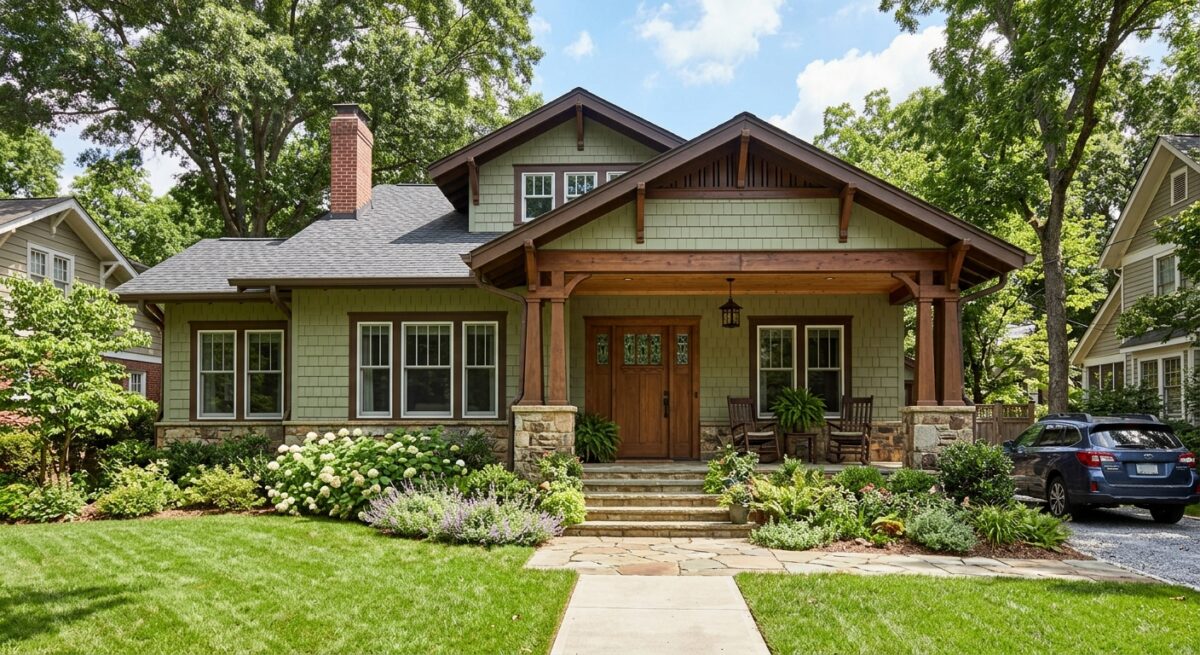
Few architectural styles command the cozy, grounded charm of an American Craftsman home. Defined by low-pitched gable roofs, tapered porch columns, handcrafted knee braces, and exposed rafter tails, Craftsman architecture celebrates structural artistry and natural materials.
However, when it comes time to paint a Craftsman exterior, many homeowners feel overwhelmed. With so many architectural elements—shingles, lap siding, structural beams, window casings, brackets, and stone piers—how do you pull together a cohesive palette that honors history while maximizing curb appeal?
Born out of the early 20th-century Arts and Crafts movement, traditional Craftsman homes rely on exterior colors that harmonize directly with the surrounding landscape. In this guide, we break down the core principles of Craftsman color theory, present five authentic paint palettes, and share practical design tips to make your home’s handcrafted details shine.
1. The Core Principles of Craftsman Exterior Design
Before selecting paint chips, it helps to understand how colors function on a traditional Craftsman facade. Unlike minimalist modern homes or stark monochrome farmhouses, a Craftsman home depends on a carefully layered hierarchy of shades.
The Rule of Three (Body, Trim, Accent)
A successful Craftsman scheme almost always relies on three distinct color roles:
Body (60–70% of the exterior): This is the main color applied to your lap siding, shingle cladding, or stucco. It serves as the visual anchor and should generally be an organic, muted shade found in nature.
Trim (25–30% of the exterior): Applied to window casings, porch pillars, fascia boards, and door frames. Trim provides definition and outlines the home’s silhouette.
Accent (5–10% of the exterior): Reserved for focal points like the front door, window sashes, decorative gable brackets, or exposed rafter tails. This is where you can introduce bolder contrast.
Integrating Natural Materials
Paint should never fight against your home’s permanent hardscaping. Original Craftsman homes rely heavily on unpainted materials like river rock foundations, fieldstone chimneys, red brick pedestals, and stained wood shakes. Always select paint undertones that match the warmth or coolness of your existing masonry and wood tones.
2. 5 Authentic Craftsman Color Palettes
Palette 1: Earth & Forest Green
This is perhaps the quintessential American Arts and Crafts combination. Deep, muted greens allow the home to feel as though it grew naturally out of its surrounding landscape.
Body: Deep Sage or Olive Green
Trim: Warm Cream or Soft Off-White
Accent & Door: Crimson, Rust Red, or Natural Stained Dark Wood
Best For: Properties surrounded by mature trees, lush gardens, or wooded lots.
Palette 2: Warm Earthy Brown & Taupe
Grounding and inviting, a brown-based palette emphasizes warmth and substantial architectural weight. It bridges the gap between raw timber and finished paint.
Body: Chestnut Brown, Bark, or Warm Taupe
Trim: Soft Beige or Warm Vanilla
Accent & Door: Deep Forest Green or Rich Burgundy
Best For: Homes featuring prominent river rock, fieldstone pedestals, or exposed brickwork.
Palette 3: Pacific Northwest Slate & Cedar
For a slightly cooler, maritime-inspired look that remains thoroughly historic, slate blues and charcoal grays offer striking contrast when paired with warm wood accents.
Body: Slate Blue or Dusty Charcoal Gray
Trim: Classic Antique White
Accent & Door: Natural Cedar Stain, Warm Terracotta, or Mustard Yellow
Best For: Coastal environments, mountain homes, or modern updates to traditional bungalows.
Palette 4: Warm Clay & Ochre
Inspired by the Prairie School and Southwestern Craftsman interpretations, warm clay and golden ochre tones create a welcoming, sun-drenched appearance.
Body: Terracotta, Dusty Clay, or Warm Ochre
Trim: Deep Bronze or Espresso Brown
Accent & Door: Rich Cream or Forest Green
Best For: Sunny climates, desert landscapes, and historic bungalow restorations.
Palette 5: Classic Cream & Dark Trim (The Inverted Look)
While most Craftsman homes feature dark body colors with lighter trim, flipping the dynamic creates a light, expansive feel without sacrificing architectural gravity.
Body: Warm Buff, Soft Tan, or Cream
Trim: Deep Forest Green, Dark Chocolate Brown, or Charcoal
Accent & Door: Rich Stained Mahogany or Redwood
Best For: Smaller bungalows or homes shaded by heavy tree cover, making the structure feel larger and brighter.
3. Highlight Structural Details with Contrast
The magic of a Craftsman home lies in its joinery and woodcraft. Using color strategically ensures these expensive details don’t blend into the background.
Architectural Element
Recommended Color Placement
Visual Purpose
Gables & Knee Braces
Dark Accent Color
Draws the eye upward to timber joinery & roof structure
Window Casings & Trim
Secondary Trim Color
Defines home silhouette & outlines window openings
Window Sashes
Dark Accent Color
Creates visual depth within window recesses
Main Siding / Shingles
Dominant Body Color
Grounds the house and anchors it to surroundings
Front Door
Vibrant Accent or Stained Wood
Creates a clear, welcoming focal point
Tapered Columns & Pillars: Paint the main shaft of porch columns in your trim color to visually anchor the heavy porch roof to stone or brick piers below.
Gables & Knee Braces: Consider using your accent color—or a shade one step darker than your body color—on decorative gables, timber trusses, and knee braces to create shadow depth.
Window Sashes vs. Trim: A traditional Craftsman technique is painting window frames/trim light cream while painting the inner moveable window sashes a dark accent (such as dark brown, dark green, or black). This gives windows visual depth and historical accuracy.
Stained Wood Surfaces: Never paint over high-quality cedar shakes, solid wood front doors, or tongue-and-groove porch ceilings if they are in good condition. A clear protective stain highlights grain patterns that paint conceals.
4. Tips for Selecting Paint Brands & Testing Samples
Look to Historical Collections: Major manufacturers offer curated historic palettes. Search for lines such as Sherwin-Williams’ Preservation Historic Collection or Benjamin Moore’s Historical Color Collection.
Account for Natural Light: Exterior colors always appear 1 to 2 shades lighter outdoors under direct sunlight than on a small swatch indoors. Select a shade with enough depth so it doesn’t look washed out at noon.
Test Large Swatches: Paint a minimum 2 ft. x 2 ft. section directly onto the siding next to your trim and stonework. Observe the test area at different times of day—morning sun, afternoon shade, and dusk—to see how undertones shift.
Conclusion
Choosing traditional Craftsman house exterior colors is all about honoring the relationship between architecture, materials, and nature. By using the Rule of Three, coordinating paint with natural stone and wood, and painting structural accents to highlight craftsmanship, you can create a timeless facade that stands out in any neighborhood.
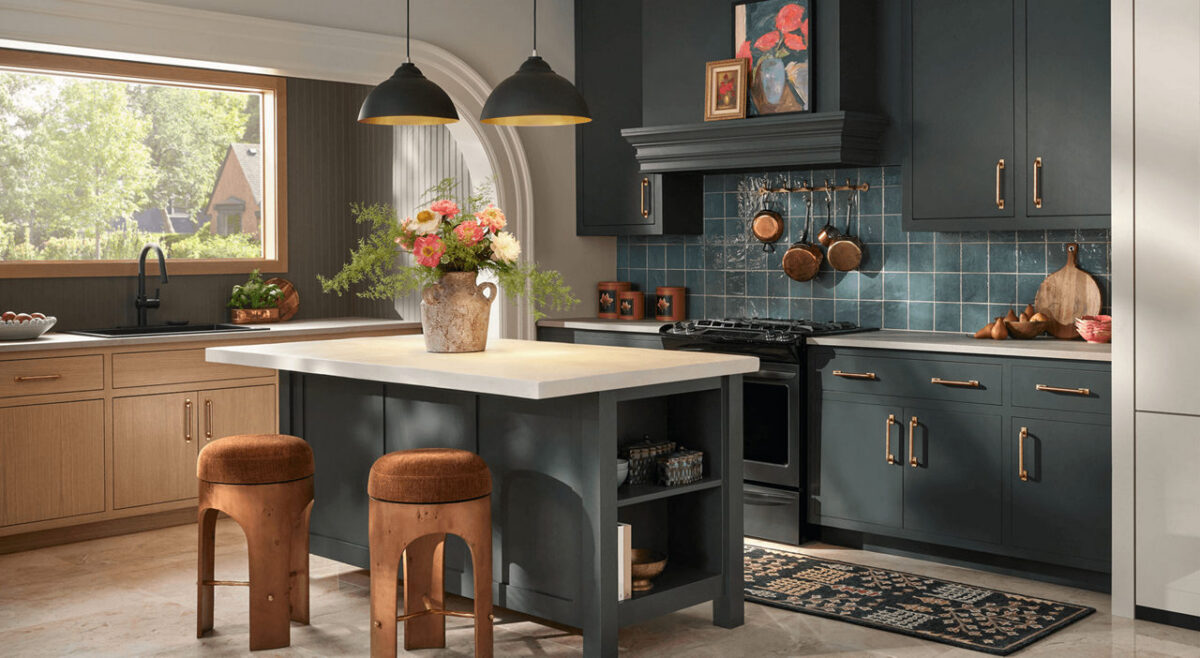
Prioritize depth and complexity in your kitchen or den with Rock Bottom. This deep, moody green-gray is the perfect foundational backdrop for timeless heirlooms and bold decor to create sophisticated spaces that are sure to be a topic of conversation. Subtle charcoal undertones add versatility, proving that neutral shades can be more than traditional grays, browns or beiges.
As summer fades and autumn sets in, many homeowners begin looking for fresh ways to bring warmth, comfort, and style into their living spaces. Choosing the right paint color can completely change how a room feels, and featured seasonal shades offer the perfect inspiration to update your home before the holiday season arrives.
Here are a few creative ways to bring this month’s featured color into your home—along with professional tips to help you get stunning, long-lasting results.
Contrast Rock Bottom walls with warm, vibrant accents like a coral armchair to create a striking seasonal look.
Beautiful Ways to Use Rich Autumn Tones in Your Home
1. Create a Cozy Accent Wall
If you want to introduce a stylish, deeper color without committing an entire room to a dark shade, an accent wall is the perfect solution. A rich accent color behind a bed headboard, around a fireplace, or along a dining room wall adds instant depth and character without overwhelming the space.
2. Give Kitchen Cabinets a Modern Facelift
Darker, sophisticated hues are one of the most popular choices for kitchen islands and lower cabinets. Pairing a bold island base with lighter countertops or classic white perimeter cabinets creates high-end visual contrast that instantly elevates your entire kitchen.
3. Make a Lasting First Impression Outdoors
Your front door is the focal point of your home’s exterior. Applying a rich, welcoming shade to your front door or exterior shutters is an easy, high-impact project that dramatically boosts your home’s curb appeal.
Choosing the Right Sheen for Every Room
The color you choose is only half the equation—selecting the right finish ensures your paint looks great and holds up to daily life:
Flat/Matte: Best for low-traffic areas like guest bedrooms or ceilings. It absorbs light, hiding minor wall imperfections while creating a soft, velvety finish.
Eggshell & Satin: The ideal middle ground for living rooms, hallways, and family spaces. These finishes offer a gentle sheen that is easy to wipe clean without looking glossy.
Semi-Gloss: Highly durable and moisture-resistant, making it the top choice for trim, baseboards, doors, and bathroom walls.
Why Professional Application Makes All the Difference
Deep, rich paint colors require precision to look their best. Achieving smooth coverage without visible roller lines or uneven patches takes proper surface preparation, tinting the primer correctly, and using professional-grade application techniques.
Whether you’re planning a quick room update or a complete home makeover, taking advantage of current color trends is a fantastic way to refresh your living space.
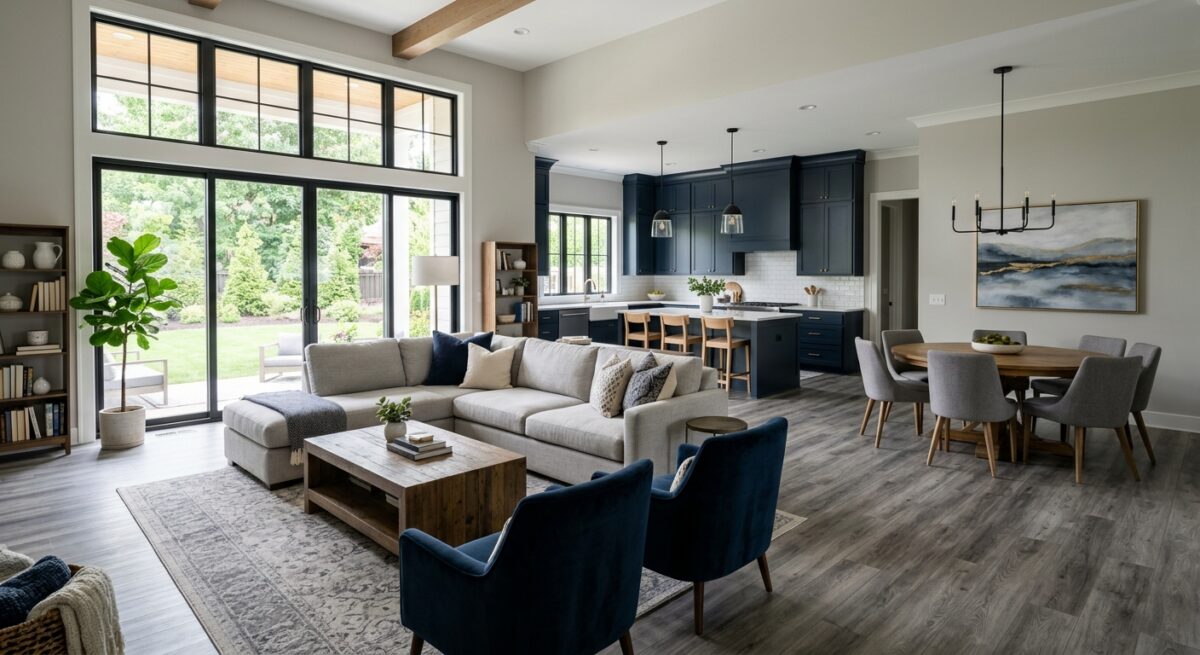
Choosing a paint color is one of the quickest ways to transform a room, but standing in front of a wall of paint swatches can feel overwhelming. The secret to picking a color you will love for years isn’t just about what looks good on a tiny paper chip—it’s about how that color interacts with the elements already in your space: your flooring, trim, and furniture.
As professional painters, we see firsthand how the right combinations can make a room feel cohesive, spacious, and inviting. Here is our insider guide to matching paint colors with the rest of your home’s interior.
1. Start with the Foundation: Matching Paint to Flooring
Your flooring is a major fixed investment, meaning it’s much harder to swap out than a coat of paint. Because it covers a huge surface area, your wall color must complement its undertones.
Hardwood & Wood-Look Tile:
Cool/Gray Woods: Pair best with cool grays, crisp whites, soft blues, or muted greens.
Warm/Honey Woods (like Oak or Pine): Look fantastic with warm off-whites, creamy greiges, olive greens, or rich navy accent walls.
Dark Walnut or Espresso: Contrast is key! Choose light to mid-tone neutral walls so the space doesn’t feel like a cave.
Carpet & Tile: Pay close attention to the undertones. A neutral carpet isn’t just “beige”—it might have pink, yellow, or green undertones. Hold paint swatches flat against the floor in natural light to check for clashing undertones before committing.
2. Frames and Accents: Coordinating with Your Trim
Trim work—baseboards, door frames, and crown molding—acts as the frame for your walls. How you match trim to walls completely changes the architecture of a room.
Classic White Trim: You can rarely go wrong with a crisp, bright white trim. It creates a clean border that makes wall colors pop.
Tone-on-Tone (Monochromatic): Painting walls and trim the exact same color—using a matte/eggshell finish on the walls and a semi-gloss on the trim—creates a sophisticated, modern look that makes small rooms feel larger.
Dark or High-Contrast Trim: If you have gorgeous architectural trim, try painting it darker than your walls (e.g., light warm gray walls with deep charcoal trim) for a bold, custom look.
Pro Tip: Choose your trim sheen for durability. Trim takes more wear and tear than walls, so stick to semi-gloss or satin finishes that are easy to wipe down.
3. Pulling It Together: Anchoring with Furniture
Your furniture bridges the gap between your floors and your walls. Instead of trying to match your wall color directly to your sofa, aim for contrast and balance.
For Bold Furniture: If you have a statement piece—like a emerald velvet sofa or a rich cognac leather armchair—let it shine by choosing neutral walls (soft cream, warm greige, or airy gray).
For Neutral Furniture: If your furniture consists of beige, cream, or gray tones, you have a clean slate. You can either go dramatic with a deep, moody wall color (like charcoal or dark teal) or keep it light and layer textures with warm off-whites.
Wood Furniture: If you have wood furniture sitting on wood floors, choose a wall color that sits between the two wood tones to create a visual break.
The Rule of Undertones: Warm vs. Cool
When in doubt, stick to this simple rule: Keep warmth with warmth, and cool with cool.
Tone
Flooring & Furniture Characteristics
Best Paint Palette
Warm
Yellow, red, orange, or golden wood tones; cream or beige fabrics; brass hardware.
Gray, ash, or dark espresso woods; slate gray or pure white fabrics; chrome/black hardware.
Crisp whites, cool grays, slate blues, deep navy, cool mint.
Test Before You Paint!
Lighting changes everything. A paint color that looks perfect in the store might look yellow under your living room lamps or washed out near a south-facing window.
Sample Big: Paint large sample boards (at least 12″ x 12″) or use peel-and-stick samples.
Move Them Around: Place samples next to your trim, against your flooring, and behind your main furniture pieces.
Watch the Clock: Check how the color looks in the morning, afternoon, and at night under artificial light.
Ready to Transform Your Space?
Matching colors can be tricky, but you don’t have to figure it out alone! Our team of professional painters is here to help you select the perfect palette and execute it with flawless precision.
Contact us today for a free color consultation and estimate! 541-497-3804
Current exterior house paint color trends are shifting decisively away from the stark whites and cool, blue-toned grays that dominated the previous decade. Instead, the focus is heavily centered on warm, comforting, nature-grounded palettes that blend seamlessly into the surrounding landscape.
If your painter client is looking to pitch the latest on-trend exterior schemes to homeowners, the defining color families and combinations include:
1. Earthy Sages and Olive Greens
Organic, nature-inspired greens have emerged as a breakout trend. Homeowners are choosing these colors because they feel sophisticated, calming, and deeply connected to the environment.
The Scheme: Sages and deep olives are typically used for the body of the house, paired with soft cream or warm white trim, and accented by natural wood elements (like a cedar front door).
Top Pick: Sherwin-Williams Evergreen Fog
2. Creamy, Warm Neutrals (The New Minimalist Look)
While the high-contrast modern look is still incredibly popular, stark, sterile whites are being replaced by softer, richer variants like cream, greige, and warm khaki.
The Scheme: A warm white or greige body paired with sharp, contrasting dark charcoal or bronze trim. This preserves the clean aesthetic of the modern farmhouse or contemporary home while feeling much more inviting.
Top Picks: Sherwin-Williams Alabaster, Sherwin-Williams Universal Khaki
3. Warm Charcoals and Espresso Browns
For homeowners wanting a dramatic, dark exterior, cool slate grays have taken a backseat to deeply saturated dark hues with brown or warm undertones.
The Scheme: Using a rich charcoal or “near-black” as the primary body color. These are heavily accented with warm wood siding segments, brass house hardware, or soft, warm white trim to keep the look from feeling too surgical.
Top Pick: Sherwin-Williams Urbane Bronze
4. Clay, Terracotta, and Desert Tones
Particularly strong in warmer regions or on stucco, Mediterranean, and Southwest-style homes, earthy desert tones are making a noticeable comeback.
The Scheme: A muted terracotta or warm ochre clay body paired with dark black or bronze trim and iron hardware to ground the warmth.
Top Picks: Sherwin-Williams Cavern Clay or Rookwood Terra Cotta.
5. Classic Coastal Blues
A perennial favorite that remains highly requested across traditional and colonial architecture.
The Scheme: Saturated navy on the main siding. The current trend pairs navy with soft ivory or cream trim rather than standard bright white, which gives the exterior a more high-end, classic feel.
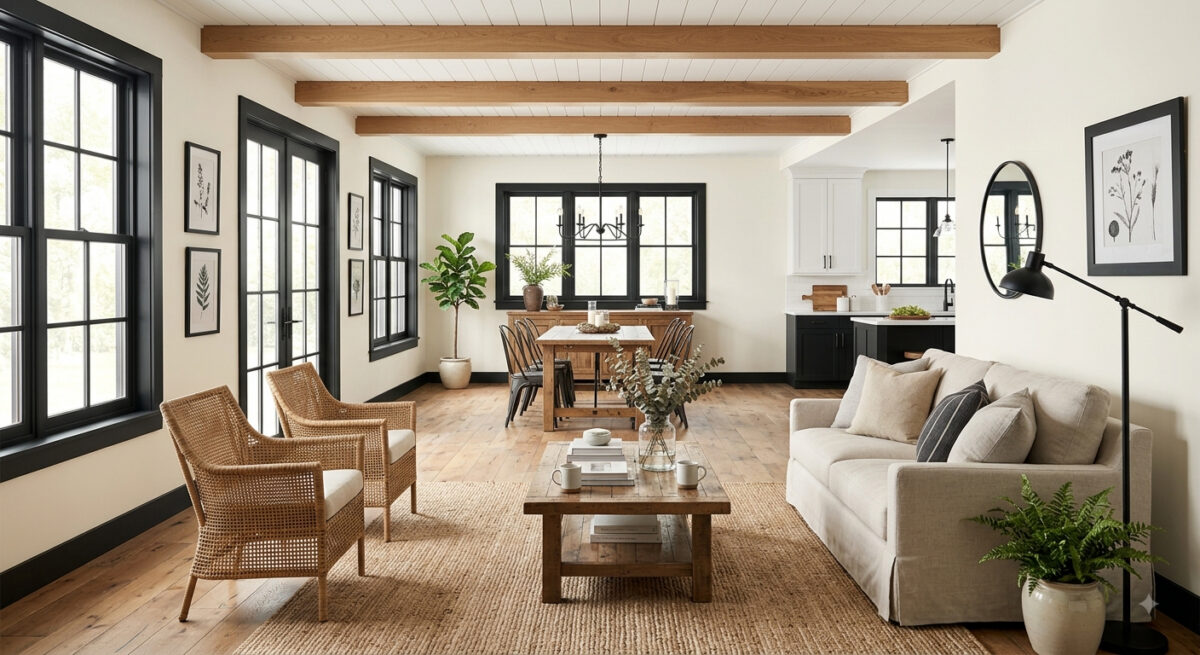
The modern farmhouse style is more than just a trend; it’s a timeless design philosophy that balances rustic warmth with clean, contemporary lines. When it comes to capturing this look on your walls and trim, the right color choices make all the difference.
The Foundation: Light and Airy Main Walls
To set the stage, opt for warm whites, soft creams, or very pale grays. These colors reflect natural light, making spaces feel larger and providing a neutral backdrop for your decor.
The Contrast: Bold Trim and Accents
The signature detail of a modern farmhouse is the use of deep charcoal or midnight black for trim, doors, window sashes, or even kitchen cabinetry. This creates a striking contrast against the light walls without disrupting the overall cohesion.
Bring warmth, personality, and grounding energy into your home this late summer with Sherwin-Williams’ August 2026 Color of the Month: Pennywise (SW 6349). At Paint Doctor’s Painting Service, we love helping homeowners transform their spaces with color choices that feel both modern and timeless.
Why We Love Pennywise (SW 6349)
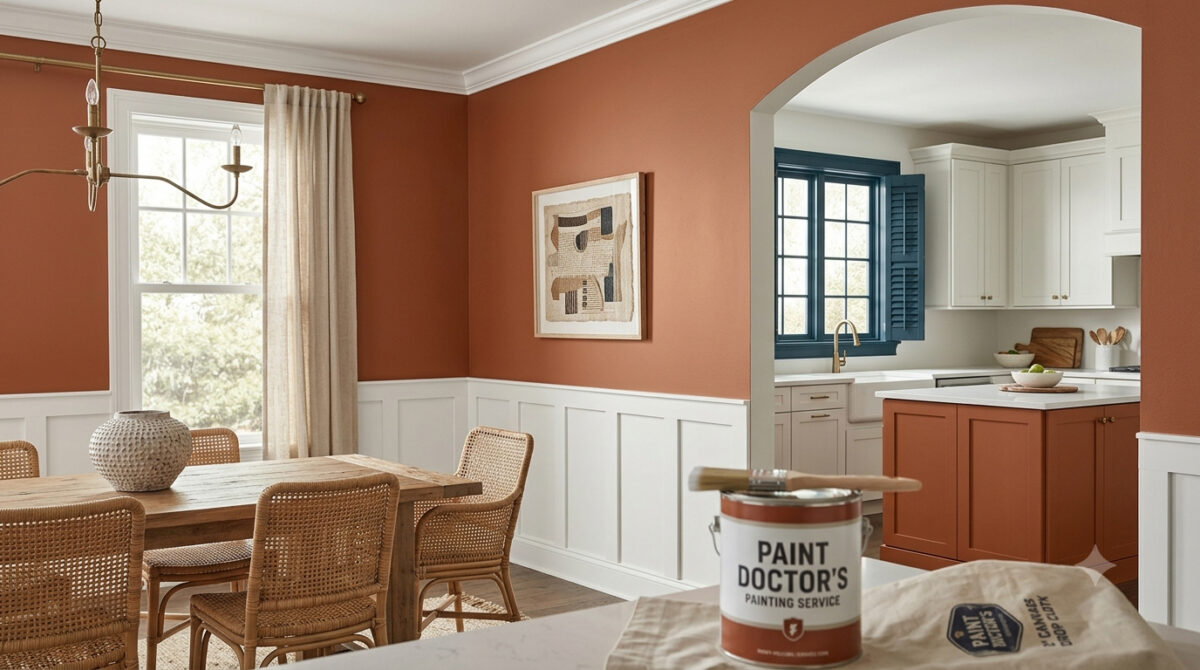
Pennywise is a rich, sun-baked terracotta neutral featuring soft clay undertones. It bridges the gap between vibrant warmth and earthy subtlety, making it an ideal choice for creating inviting, cozy interiors.
Versatile Tone: Works beautifully as an accent wall or across entire living rooms, dining spaces, and kitchen islands.
Organic Aesthetic: Aligns seamlessly with modern handcrafted design, natural woods, and woven textures.
Comforting Aura: Delivers a sophisticated, lived-in feel without overpowering the room.
Winning Color Palettes & Pairings
To highlight the warmth of Pennywise, contrast it with cool tones or crisp whites for a balanced aesthetic:
Pure White (SW 7005): Creates a clean, uplifting contrast on surrounding walls, trim, or ceilings to keep the space feeling bright and modern.
Bunglehouse Blue (SW 0048): Adds deep, dramatic sophistication. Use it on window trim, cabinetry, or exterior shutters to offset Pennywise’s earthy warmth.
Natural Elements: Pair with warm wood finishes, aged brass hardware, and greenery to accentuate its organic terracotta undertones.
Best Places to Use Pennywise in Your Home
Kitchen Island Accent: Paint your island base with Pennywise while keeping cabinets light for an instant, high-end focal point.
Dining Room Walls: Wrap your dining room in this inviting shade to create a intimate space for gatherings.
Front Door & Exterior Accents: Give your home’s entryway a memorable curb appeal boost with a terracotta touch that welcomes guests.
Let Paint Doctor’s Painting Service Bring Your Vision to Life
Achieving a smooth, flawless finish with rich terracotta tones requires proper surface preparation and professional application. Whether you want a single accent wall or a full interior overhaul, Paint Doctor’s Painting Service is here to deliver exceptional results. Contact us today to schedule your consultation and bring the warmth of Pennywise into your home! 541-497-3804