
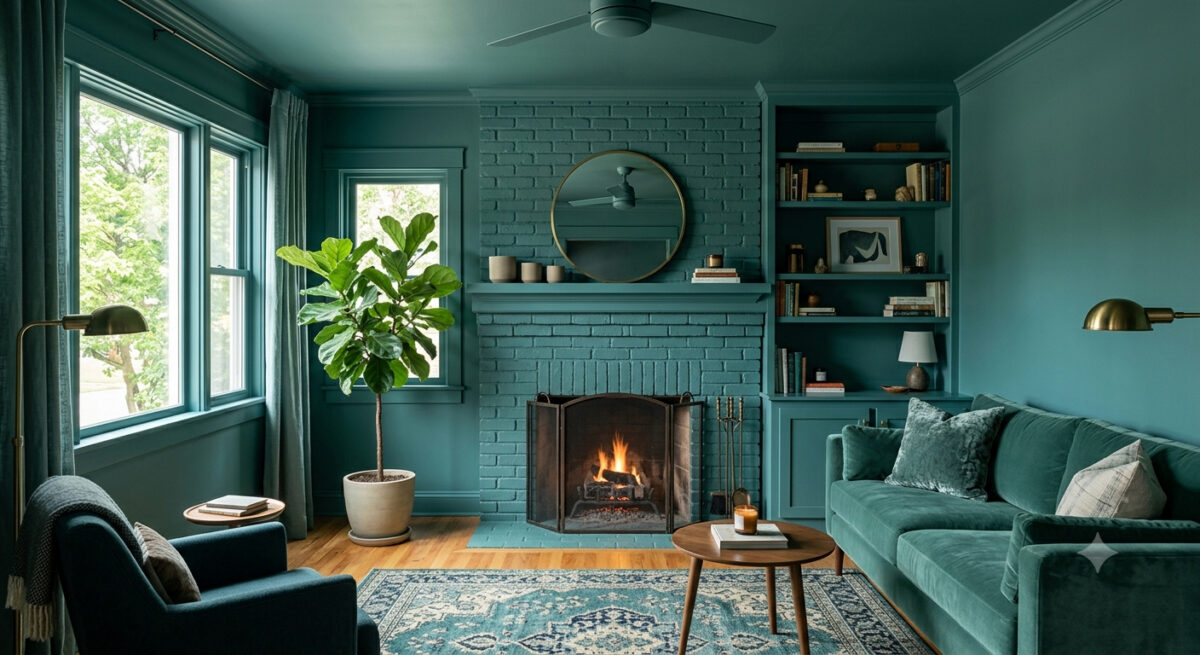
If you’ve spent any time on interior design blogs or Pinterest lately, you’ve probably noticed room transformations that feel surprisingly cozy, dramatic, and seamless. The secret? Color drenching.
It’s one of the most requested painting techniques right now, and for good reason—it completely changes the vibe of a home without requiring a massive renovation. But while the concept sounds simple, executing it takes strategy, precision, and the right prep work.
Here is everything you need to know about color drenching, why it works, and how to bring it into your home.
What Exactly Is Color Drenching?
Color drenching is the process of painting everything in a room a single color (or varying tones of the same shade).
Instead of the traditional formula—colored walls paired with crisp white trim, white ceilings, and neutral doors—color drenching wraps the entire space in one cohesive hue.
That includes:
- Walls and ceilings
- Baseboards, crown molding, and door frames
- Doors and window trim
- Built-ins, radiators, and cabinetry
The result is an immersive, monochromatic look that makes architectural details blend together into a sleek, intentional backdrop.
Why Color Drenching Works So Well
Color drenching isn’t just a gimmick; it fixes several common design challenges:
1. It Makes Small Spaces Feel Larger
High-contrast white trim cuts a room into distinct horizontal line segments, visually chopping up the space. When you paint walls, trim, and ceilings the exact same shade, those visual borders disappear. Your eyes flow across the room uninterrupted, which actually makes small offices, powder rooms, or bedrooms feel larger and airier.
2. It Softens Awkward Architecture
Got sloped attic ceilings, bulky radiators, or asymmetrical doorway trim? Painting them the same shade as the wall masks visual clutter and lets the shape of the room feel intentional rather than chaotic.
3. It Creates Instant Mood and Drama
Deep tones like moody navy, forest green, rich terracotta, or soft charcoal create a cocoon-like environment. If you want a living room, library, or master bedroom that feels warm and inviting, color drenching is unmatched.
Pro Tip: The Secret Is in the Sheens
The biggest mistake DIYers make with color drenching is using the exact same paint sheen on every surface. Doing so can leave a room looking flat or clinical.
Professional painters use sheen variation to create subtle depth and durability while staying within one color family:
- Ceilings: Flat or Ultramatt (hides imperfections and reduces glare).
- Walls: Eggshell or Satin (easy to wipe down with a soft, warm glow).
- Trim & Doors: Semi-Gloss or High-Gloss (adds contrast, resists scuffs, and reflects light beautifully).
Using higher sheens on trim and doors catches the light differently than the matte walls, giving you visual texture without introducing a second color.
3 Great Rooms to Try Color Drenching
- The Powder Room: Small, low-risk, and high-impact. Deep, dark shades work magic in small spaces.
- The Home Office or Den: Deep moody hues reduce visual distraction and create a focused, cozy atmosphere.
- The Master Bedroom: Soft, warm neutrals or muted greens create a calm, boutique-hotel retreat feel.
Ready to Transform Your Space?
While color drenching looks effortless, achieving flawless coverage across different surfaces—woodwork, drywall, and ceilings—takes expert surface prep, precise edging, and the right paint formulations.
If you’re ready to bring this stunning trend into your home without the hassle of taped edges and endless coats, we’re here to help.